Theodoros Foskolos
Master (track): Dual track - Bioinformatics, Systems Biology
Previous education (BSc): Computer Science
Current position and employer: Bioinformatics Scientist, Netherlands Cancer Institute
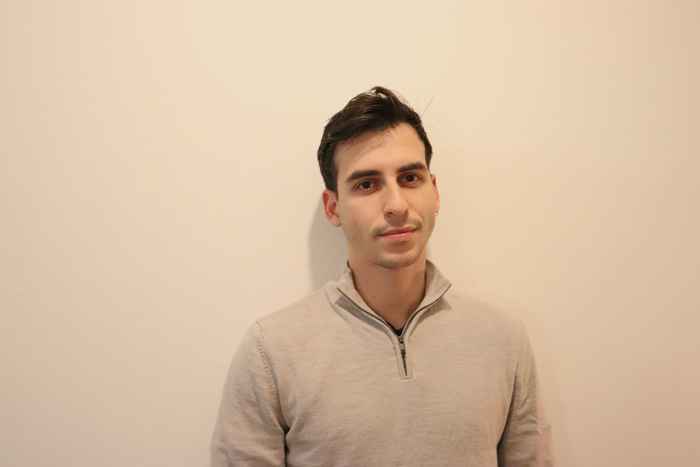
I chose the UvA/VU joint degree because both universities have a strong and well-established reputation in research. I am also drawn to Amsterdam’s international and multicultural environment, where collaboration with researchers from across the Netherlands and around the world is common. Additionally, the Netherlands has a historical role in shaping the field of bioinformatics, where the term bioinformatician was first defined, thus I could not exclude it from the formula.
Why did you choose this programme at the time?
Because of my interest on the intersection of data science, statistics and technology with Biology-Medicine.
How much freedom did you have when selecting courses or projects? Are there opportunities to tailor the programme to your interests?
There was a lot of freedom on the course choices, however because I found quite interesting both 2 Major tracks that the Master’s program was providing, I was limited to a specific selection of courses.
How practical or theoretical is the programme?
Had a lot of theory but also a lot of relevant practical applications in the lab-hours and exercises.
How would you describe the atmosphere within the programme? Do you interact a lot with fellow students and lecturers? Are there many group assignments, or is the focus more on individual work?
I collaborated with many fellow students throughout the programme. In several cases, even when we had no prior connection, we quickly developed effective communication and problem-solving dynamics, which made the group work productive. There are indeed meaningful opportunities for teamwork, alongside individual assignments. The interaction with lecturers was also positive. Many of them were approachable, and the atmosphere often felt less hierarchical than expected, not just professor–student, but more like colleagues in the making. This made it comfortable to discuss scientific ideas openly, share perspectives, and learn from each other.
What types of thesis or graduation projects are possible? Can you provide an example of your own project?
There is a wide range of possible research directions for the thesis projects. For example, my first thesis was a hybrid project that combined both wet-lab and computational work. I generated my own microscopy data on fungal networks in the laboratory and then developed a computational pipeline to analyse this data, which allowed me to extract patterns and propose new hypotheses. For my second project, I worked entirely computationally. I focused on single-cell transcriptomics to study cancer progression, aiming to identify informative gene expression patterns that could possibly contribute to therapeutic targeting strategies.
Was it easy for you to find a job after your master’s? How did you end up in your current workplace?
I think it is a really difficult task to find a job in the bioinformatics/computational field, as the job itself is not well defined and there are quite a lot of applications, all need unique skills and domain knowledge. For me, the opportunity that I had to work into the two diverse projects in combination with my previous experience, helped me clarify my future research focus and develop the relevant skills. During my research internship, I discovered fascinating applications of computational biology in immunology and cancer research, particularly in analysing omics data generated in clinical settings. This experience guided me toward my current workplace, which aligns closely with my research interests.
What advice would you give to someone considering this master’s programme?
I would recommend the programme, especially to those who are passionate about the field. It is demanding, given the complexity and interdisciplinary nature of computational biology and bioinformatics, but it offers a good exposure to cutting-edge applications. The programme highlights how rapidly the field is evolving and how current technological advancements enable us to quantitatively understand life processes, ultimately shaping the future of healthcare, agriculture and industry.