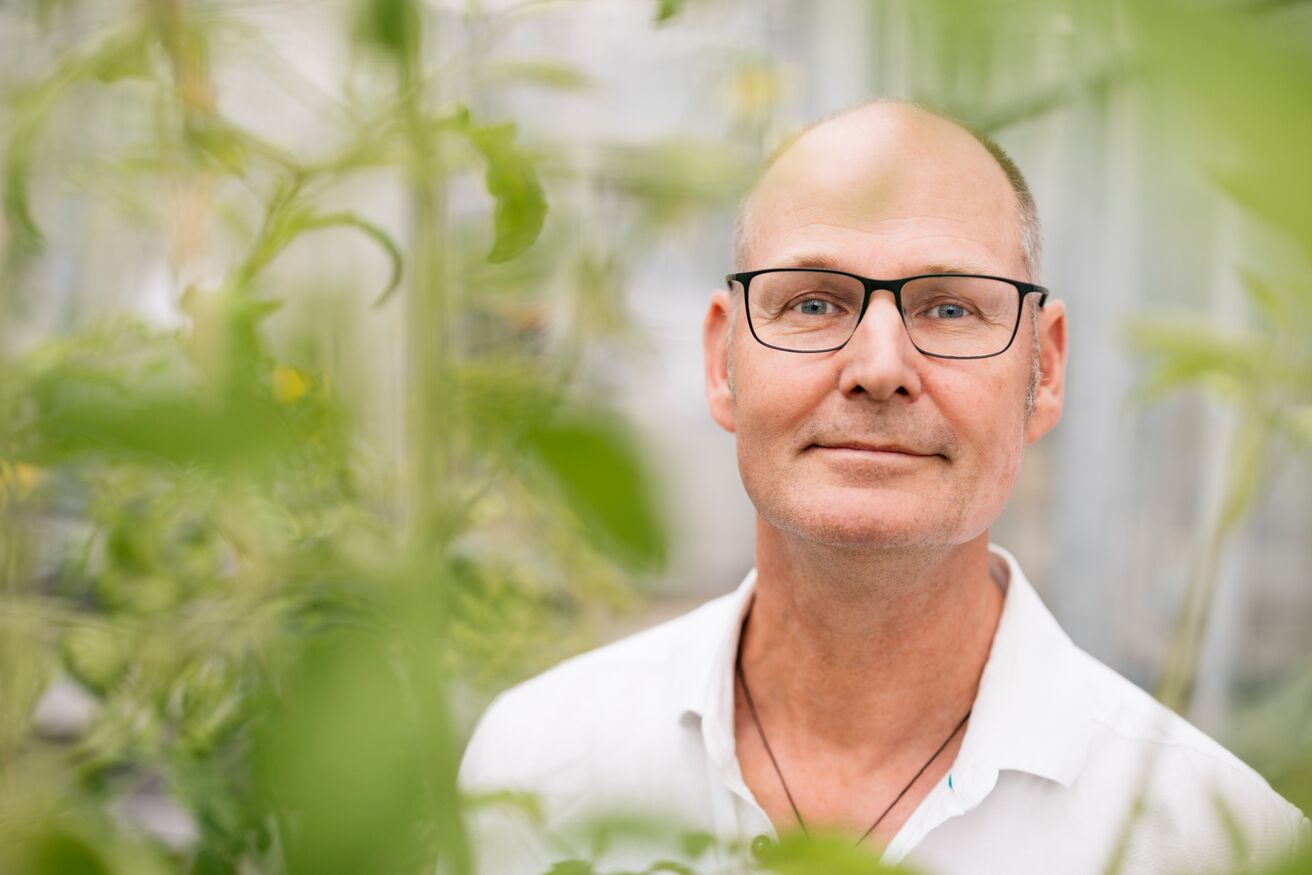
Frank Takken appointed Professor of Molecular Plant Pathology
18 September 2026
Advancing sustainable plant health
As professor, Takken will direct and consolidate the research programme of the Molecular Plant Pathology group within the Swammerdam Institute for Life Sciences. His research and teaching focus on understanding the interactions between plants and their pathogens and on translating this knowledge into practical applications. His work closely aligns with the Faculty’s Green Life Sciences research profile and addresses societal challenges in sustainable agriculture and food security.
Research on plant immunity
Frank Takken’s research examines the molecular processes that determine whether an infection causes disease or triggers effective plant immunity. His group investigates how plants detect pathogens, how immune receptors and signalling pathways function, and how fungi, viruses and bacteria can suppress plant defences. Using advanced technologies, the group identifies the genes and processes involved in these interactions. The resulting knowledge is translated into new strategies for sustainable crop protection, including precision genome editing and the targeted use of resistance and susceptibility genes. This work contributes to disease-resistant crops, reduced pesticide use, and climate-resilient agriculture.
Career and expertise
Frank Takken studied Biology at Vrije Universiteit Amsterdam and obtained his PhD in molecular genetics in 1999, focusing on the isolation of resistance genes in tomato. As a postdoctoral researcher at Wageningen University & Research and KeyGene, he expanded his expertise in plant-pathogenic fungi. He has worked at the University of Amsterdam since 2001 and has been Associate Professor of Molecular Plant Pathology since 2015. He has published more than 160 scientific papers and has secured, among other funding, an NWO Vici grant as well as several European, NWO and Dutch Top Sector awards. Alongside his research, he teaches in the Bachelor’s and Master’s programmes in Biology and Green Life Sciences. He works closely with breeding and plant biotechnology companies, acts as a scientific adviser and is co-applicant on several patents. He is also active in science communication, valorisation, and national and European research consortia.