How do cells know when to switch on Wnt4?
3 September 2026
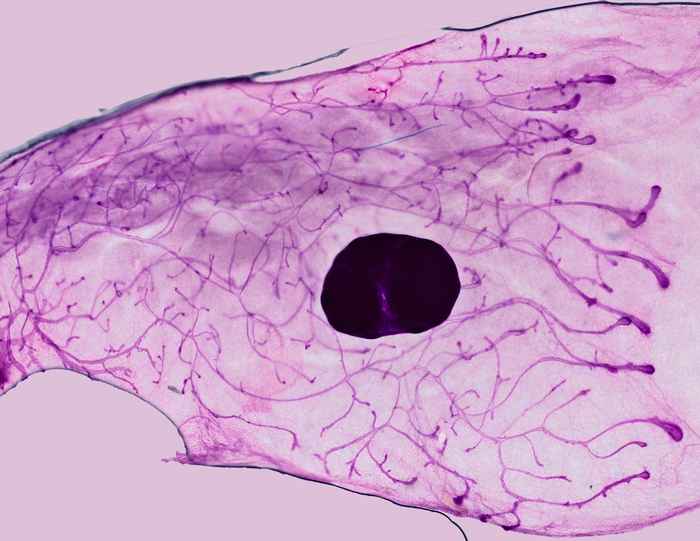
The study, published in Cell Reports, also shows that the DNA elements regulating Wnt4 differ substantially between mice and humans. The work provides fundamental insight into how the non-coding genome contributes to health and disease.
More than protein-coding DNA
Every cell in the human body contains around two metres of DNA. Yet only a small proportion of that DNA contains instructions for making proteins. Much of the remaining, non-coding DNA helps regulate which genes are switched on in different cell types and at different stages of development. Researchers in the Developmental, Stem Cell and Cancer Biology group at SILS investigated this regulatory system for Wnt4. This gene is particularly important in the mammary gland, which undergoes major changes during puberty, pregnancy and lactation.
During early pregnancy, for example, the hormone progesterone stimulates the development of milk-producing structures called alveoli. However, progesterone does not act directly on every cell in the tissue. Instead, specialised hormone-responsive cells receive the signal and activate genes including Wnt4. The proteins encoded by these genes then pass local growth signals to neighbouring cells. Led by Prof. dr. Renée van Amerongen, the researchers examined the first stage of this signalling process: how cells recognise that Wnt4 should be switched on, and which parts of the genome are involved.
A journey into 3D chromatin
The team studied chromatin: DNA in its folded, three-dimensional form. This structure is crucial for gene regulation, because it can bring distant regulatory DNA elements into physical contact with a gene. These interactions can help determine whether a gene is active or inactive. Former SILS lab members dr. Yorick van de Grift, dr. Marleen Aarts, dr. Katrin Wiese and dr. Nika Heijmans, who share first authorship of the study, identified a series of distant DNA elements that regulate Wnt4 expression through such three-dimensional interactions.
The researchers also identified an additional layer of regulation in the molecular pathway through which progesterone activates Wnt4. They found other regulatory proteins to be involved alongside progesterone – and these may have a broader role in mammary-gland biology and breast cancer, opening up new directions for research.
Different routes in mice and humans
A striking result was that this regulation is only partly conserved between species. In both mice and humans, progesterone controls Wnt4 expression, but it does so using very different DNA binding elements.
This finding illustrates both the value and the limitations of model systems. Processes such as puberty and pregnancy involve complex interactions between tissues that cannot yet be fully reproduced in a laboratory dish, which makes animal models indispensable. At the same time, research into gene regulation in human health and disease requires better models of human tissues, including breast tissue.
“The question is if we can ever fully mimic complex biological processes in vitro. But when it comes to gene regulation, especially in the context of human health and disease, we really need to have better model systems for human tissues like breast tissue.”Prof. dr. Renée van Amerongen
Building knowledge for future health research
The study has no immediate clinical application. However, understanding how to read and interpret the chromatin code may eventually help researchers explain why particular DNA variants influence a person’s susceptibility to disease. Such knowledge could also help identify mechanisms behind rare or congenital conditions, or explain why some tumors become resistant to treatment. In the longer term, it may even support approaches that alter gene-regulatory programmes. For now, the research offers an essential step towards understanding how the non-coding genome regulates genes in health and disease.
Publication and collaboration
The study was published in Cell Reports. Ingeborg Hooijkaas, MSc, and Dr Thijs van Boxtel are co-authors. The research was led by Renée van Amerongen and included a collaboration with the NKI Transgenic and Knockout Core Facility. The work was funded by the Netherlands Organisation for Scientific Research (NWO), through a VIDI grant to Van Amerongen, and by the European Union, through a Marie Skłodowska-Curie Actions Individual Fellowship to Katrin Wiese.
publication details
van de Grift YBC, Aarts MT, Wiese KE, Heijmans N, Hooijkaas IB, Pritchard CEJ, Henneman L, Krimpenfort PJA, van Boxtel AL, van Amerongen R. GRHL and PGR control WNT4 expression via 3D looping of conserved and species-specific enhancers.
Cell Rep. 2026 Jul 28;45(7):117575. doi: 10.1016/j.celrep.2026.117575. Epub 2026 Jun 25. PMID: 42348419.