Microbiome Restaurant
University of Amsterdam and Amsterdam UMC bring science and art together at IDFA DocLab
- Start date
- 13 November 2026
- End date
- 22 November 2026
- Location
- IDFA DocLab @droog
What if we are not just human, but also an ecosystem of trillions of micro-organisms? At IDFA (International Documentary Film Festival Amsterdam) DocLab 2026, Microbiome Restaurant, an immersive experience by artists’ collective POLYMORF, will have its world premiere. The project brings the invisible world of the microbiome to life. Research at the University of Amsterdam’s Swammerdam Institute for Life Sciences (SILS) and Amsterdam UMC and into the interplay between gut bacteria, the brain and mental health has been an important source of inspiration.
Making the invisible tangible
Our bodies host an enormous diversity of micro-organisms which together make up our microbiome. A growing body of research shows that these micro-organisms are linked to our physical and mental health. But how can complex biological processes like these be made understandable and tangible?
In Microbiome Restaurant, art and science meet. Using virtual reality (VR), robotics, touch and gastronomic experiences, POLYMORF takes visitors on a journey through their own microbial ecosystem.
During the VR experience Plural Tastings, participants find themselves inside a life-size Petri dish and encounter the micro-organisms with which they share their bodies. The experience invites visitors to think differently about the boundaries between humans and their environment, and to consider how much influence we really have over our bodies and behaviour.
From population studies to organoids: the science behind the project
The scientific foundations of the project are closely connected to the research of Anja Lok, a psychiatrist and researcher in the Department of Psychiatry at Amsterdam UMC and a guest associate professor at SILS, University of Amsterdam. Through these affiliations, she brings clinical psychiatry together with fundamental microbiology and experimental life sciences.
In earlier research, published in Nature Communications, a link was found between the composition of the gut microbiome and depressive symptoms in more than 3,200 participants in the Amsterdam HELIUS study.
This research is now being extended through Guts to Beat Depression!, a project funded by the ZonMw Open Competition. In this interdisciplinary programme, researchers from Amsterdam UMC and the University of Amsterdam—including Anja Lok, Aniko Korosi and Stanley Brul—are working with, among others, Robert Kraaij (Erasmus MC) and Rick Quax (UvA).
The project brings together microbiome data from large population studies and laboratory research to identify microbes and substances they produce that may be linked to depression. Researchers will use experimental models, including organoids—tiny models of human tissue—to study how these substances affect the body. By combining these approaches, the project aims to better understand the link between the microbiome and depression and identify new ways to prevent or treat it.
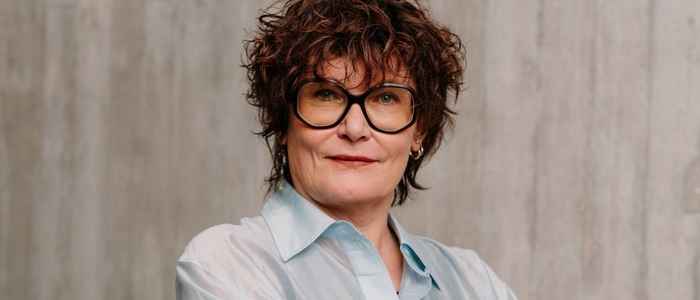
We are investigating how the trillions of micro-organisms we live alongside may contribute to our mental health. From large population studies to experiments with organoids, we are trying to understand the biological mechanisms involved. But what does it actually mean to think of ourselves as an ecosystem? Art offers the opportunity to explore and experience that question in a completely different way.Anja Lok
A bridge between art, microbiology, psychiatry and society
As part of the interdisciplinary project INSIDE OUT: Experience Our Microbiome, supported by Amsterdam Brain and Cognition (UvA), Anja Lok and Professor Stanley Brul (SILS), among others, are working to connect insights from microbiology, neuroscience and psychiatry with immersive artistic experiences. The collaboration shows how fundamental and clinical research can have an impact beyond the laboratory.
Scientific insights into the microbiome and the gut–brain axis provide a starting point for artistic exploration, while artists raise new questions about autonomy, identity and the ways in which humans are intertwined with their biological environment. For Amsterdam UMC and SILS, this collaboration supports their ambition to strengthen interdisciplinary research and the connections between art and science—not only in research and education, but also in public dialogue about health and what it means to be human.
For us, art is more than a way to make research accessible. It is also a form of research in its own right. By bringing different perspectives together, we can challenge existing assumptions about health, illness and what it means to be human.Anja Lok