University Board visits SILS
On Wednesday 24 January, researchers of the Swammerdam Institute for Life Sciences (SILS) welcomed the University of Amsterdam’s Executive Board on a working visit to the Faculty of Science.
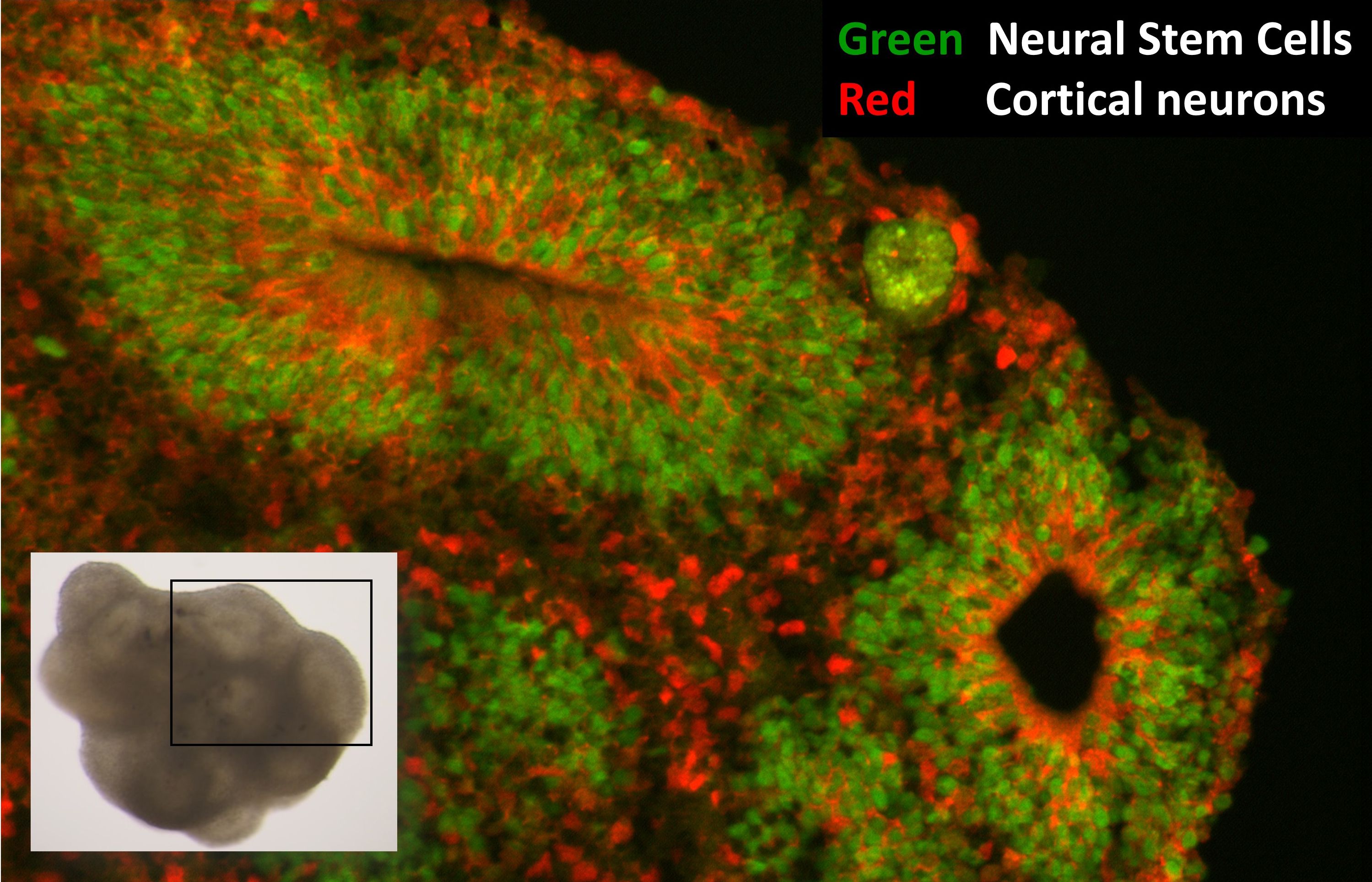
research and technology development on mouse and human organoids
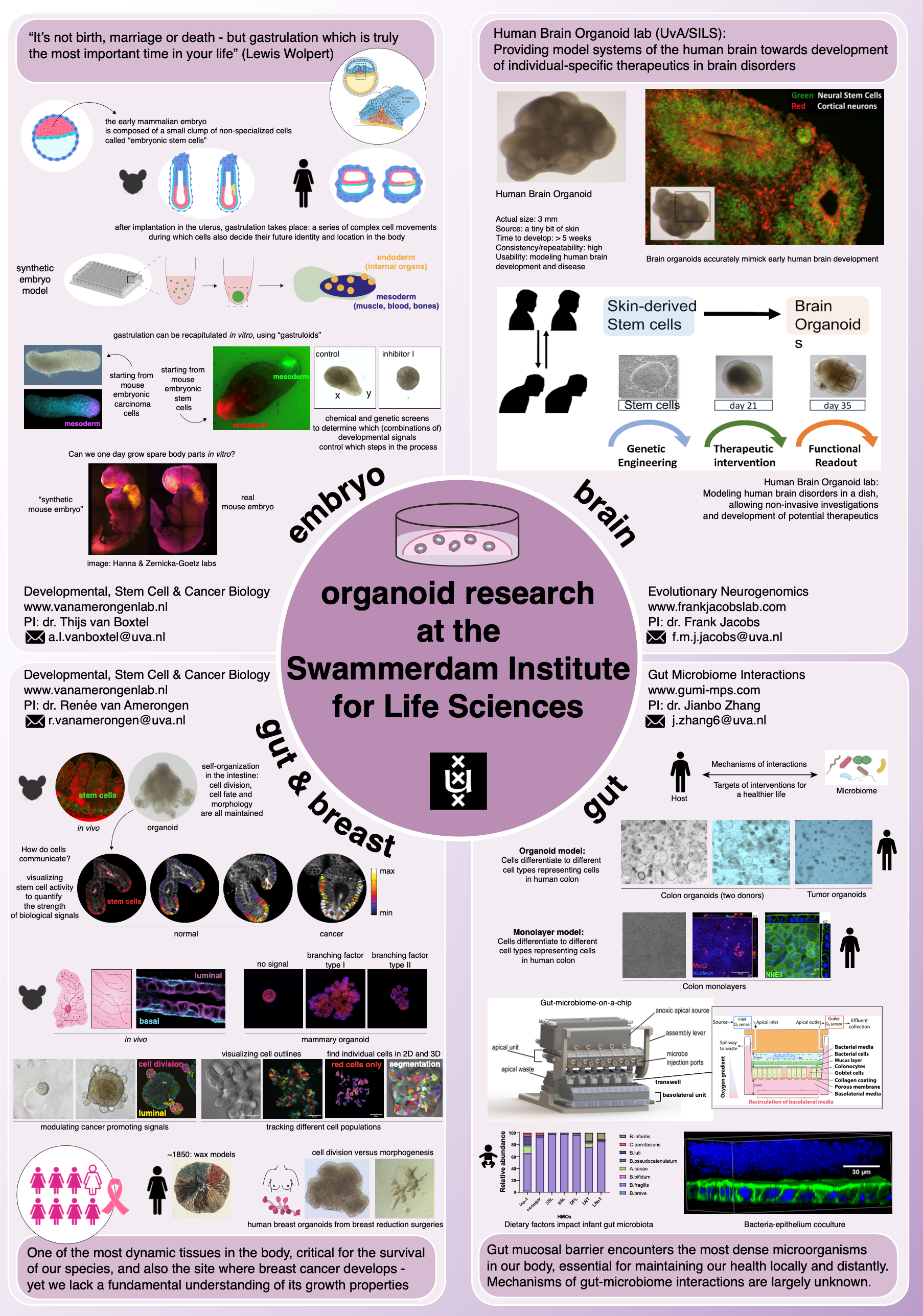
On Wednesday 24 January 2024 the UvA board paid a flash visit to the Swammerdam Institute for Life Sciences, where they got a brief taste of ongoing research and technology development on mouse and human organoids. Dr. Jianbo Zhang, dr. Frank Jacobs (Evolutionary Neurogenomics) and dr. Renée van Amerongen (Developmental, Stem Cell and Cancer Biology group) presented a poster displaying ongoing work on gut, brain and breast organoids as well as gastruloids as a model for early embryonic development. In addition, Dr. Jianbo Zhang introduced the intestinal organoids, a miniature gut model in a dish, in the lab. The organoids can be used to build the gut physiomimetic system that recapitulates some crucial features in the human intestine. He showcased the GuMI system, a mesofluidic and programable device to coculture human cells and microorganisms under physiological oxygen conditions. This unique system, now available in Research Square (https://doi.org/10.21203/rs.3.rs-3373576/v1), enables researchers to understand host-microbe-immune crosstalk better.