Evolutionary Neurogenomics
Group leader dr. Frank Jacobs
In the Jacobs Lab we investigate how genomic evolution has shaped and rewired gene regulatory networks involved in human brain development.
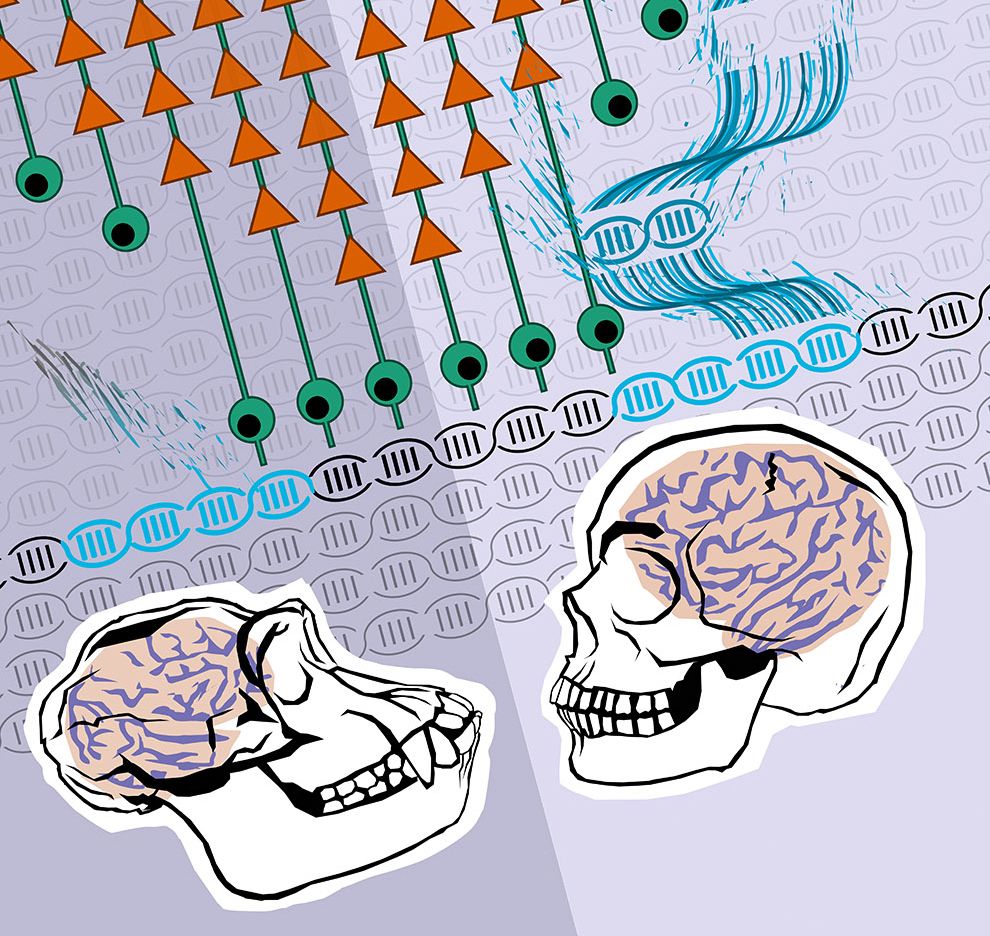
Genomic changes can be small, such as retrotransposon insertions, or big, such as segmental duplications of whole segments of the genome. Genomic modifications happened frequently during primate evolution, but the extent to which individual evolutionary genomic events accounted for changes in gene expression and contributed to the evolution of species remains unclear. The impact of both types of evolutionary genomic changes on human brain development and disease are the main topics in my lab's research. We work closely together with clinical experts and geneticists in several labs in the Netherlands and across the world. Our research focusses on the complex genetics of human diseases such as Alzheimer’s Disease, Spinal Muscular Atrophy, Fragile X-syndrome, X-linked Dystonia Parkinsonism, Koolen-deVries syndrome, 1q21.1 deletion syndrome & Coffin-Siris syndrome.
In a more general view, research in the Evolutionary Neurogenomics group can be subdivided into two three main themes: