Swammerdam double seminar
featuring two leading voices in microbiome and holobiont research
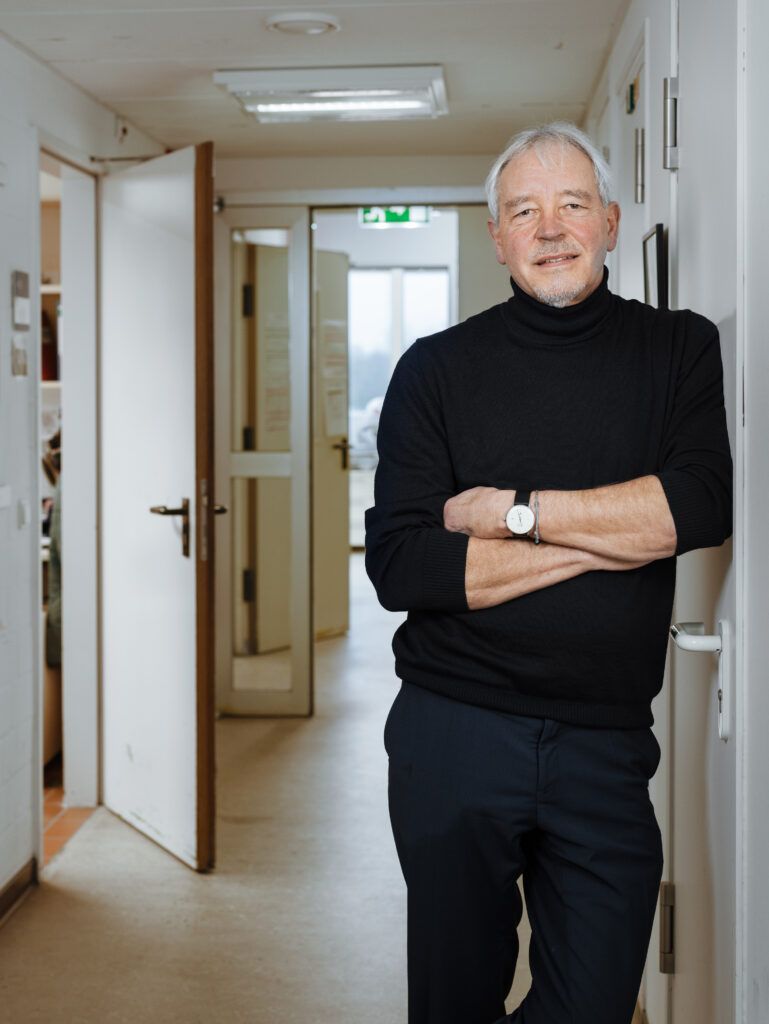
by Prof. Seth Bordenstein (Pennsylvania State University) & by Prof. Thomas C.G. Bosch (University of Kiel)
Event details from: Swammerdam double seminar
- Date
- 26 May 2026
- Time
- 15:00 – 17:00
- Room
- H0.08
title: Curing Speciation: The Microbiome and the Origin of Species
(15-16hrs)
Speaker: Seth Bordenstein
Pennsylvania State University, Departments of Biology and Entomology, University Park, PA, USA;
abstract
For nearly a century, the study of speciation has been a thoroughly nuclear affair, with evolutionary biologists meticulously mapping the Mendelian and cytoplasmic loci that erect reproductive barriers while largely ignoring the microbial world. Yet, a parallel and strangely neglected history suggests we have still much to learn. As early as 1927, Ivan Wallin audaciously proposed that symbiotic bacteria were the true engines of evolutionary novelty, a radical notion that received a stunning empirical boost in the 1970s when Lee Ehrman demonstrated that hybrid sterility in Drosophila could be cured with a simple dose of antibiotics. But while Lynn Margulis later championed symbiosis as a universal driver of speciation, her grand synthesis lacked the experimental backing required to sway a skeptical community, leaving the field largely dormant. We are reviving this forgotten line of inquiry with a systematic, empirical investigation into how endosymbiotic microbes and the host microbiome actively drive reproductive isolation in animal holobionts, finally dragging a brilliant, long-neglected hypothesis out of historical obscurity and into the light of modern biology.
short bio:
At Pennsylvania State University, Dr. Bordenstein holds the Dorothy Foehr Huck and J. Lloyd Huck Endowed Chair in Microbiome Sciences, serves as a Professor of Biology and Entomology, and directs the One Health Microbiome Center—a massive 550-member organization that recently won the 2024 WH Pierce Prize for Global Impact in Microbiology. His specific research specialties span using microbes to control mosquito-borne diseases, exploring human microbiome diversity, and pioneering global classroom outreach through Discover the Microbes Within! The Wolbachia Project. A Clarivate Highly Cited Researcher and elected Fellow of both the American Academy of Microbiology and the American Association for the Advancement of Science (AAAS), Dr. Bordenstein continues to optimize and advance the microbiome sciences and holobiont biology, which asserts that host biology can only be understood in the light of microbial symbiosis
title: A Microbial Perspective on Animal Development and Behaviour
(16-17hrs)
Speaker: Thomas C.G. Bosch
Zoological Institute, University of Kiel, Kiel, Germany
abstract
Animals have evolved within the framework of the microbes and are constantly exposed to diverse microbiota. This dominance of the microbial world is forcing all fields of biology to question some of their most basic premises, with developmental biology being no exception. While animals under laboratory conditions can develop and live without microbes, they are far from normal, and would not survive under natural conditions, where their fitness would be strongly compromised. Since much of the undescribed biodiversity on Earth is microbial, any consideration of animal development in the absence of the recognition of microbes will be incomplete. Here, using the ancestral metazoan Hydra as model, I will show that animal development and behaviour may never have been autonomous, rather it requires transient or persistent interactions with the microbial world. I propose that to formulate a comprehensive understanding of embryogenesis and post-embryonic development, we must recognize that symbiotic microbes provide important developmental signals and contribute in significant ways to phenotype production. By integrating the microbiome perspective into our understanding of evolution and function, we gain richer insights into the dynamic interplay that drives health, adaptation, and the very fabric of life itself.
short bio:
Thomas Bosch is a zoologist and comparative developmental biologist at Kiel University, Germany. His research focuses on the evolution and functioning of metaorganisms. A central question of his work is what interactions exist between animals and their co-evolved microorganisms, how these relationships have evolved, and the mechanisms by which they are regulated. Bosch has authored over 200 articles and was the founding director of the DFG-funded Collaborative Research Center (CRC/SFB 1182) “Origin and Function of Metaorganisms,” which addresses the crucial role of multi-organismic interactions in health and disease. As a recognized thought leader on the importance of microbiota in the life sciences, his work aims to further establish the concept of viewing all living organisms as holobionts or metaorganisms. Bosch is a member of the German National Academy of Sciences Leopoldina and serves on several national and international academic committees and boards. Since 2016, he has been a Fellow of the Canadian Institute for Advanced Research (CIFAR) in the program “Humans and the Microbiome.” His honors include an honorary doctorate (Dr. honoris causa) from St. Petersburg State University, Russia (2004); the highest scientific award of the German Zoological Society (DZG), the Karl-Ritter-von-Frisch Medal (2022); and the inaugural Microbiome Medal from Penn State University (2025).