seminar by Christine Queitsch
For everyone interested in gene regulation through cis-regulatory elements
Title: Learning the grammar of crop regulatory DNA for precise engineering of gene expression
Event details from: seminar by Christine Queitsch
- Date
- 10 July 2023
- Time
- 15:00 – 16:00
- Room
- A1.16
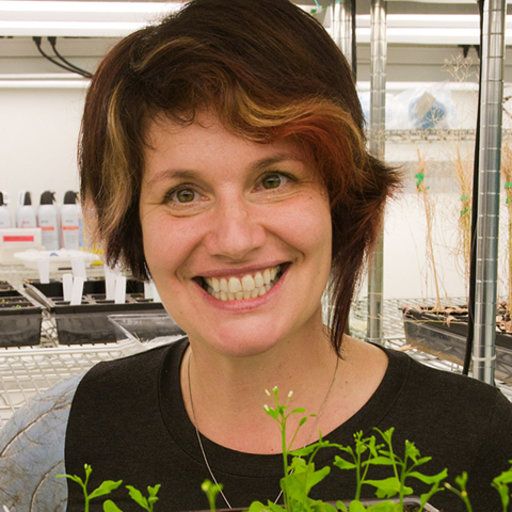
Prof. dr. Christine Queitsch, University of Washington, Genome Sciences, Seattle, USA
Abstract:
Our limited understanding of plant gene regulation and the lack of diverse, plant-derived regulatory elements to drive transgenes have hampered plant synthetic biology. We use Plant STARR-seq, a massively parallel reporter assay, and machine learning to decipher the grammar of gene-regulatory elements in maize, sorghum and tomato, including enhancers, promoters, insulators and terminators. Enabled by the scale of the resulting data, we can identify the salient features of regulatory elements by convolutional neural network models, which are used to evolve and design synthetic elements with desired features. Unpublished results for enhancers, insulators, and terminators will be presented. Ultimately, we aim to leverage data on element activity and strength together with data on long-range regulatory interactions to build accurate models of gene expression. To infer long-range regulatory interactions, we apply Fiber-seq, a single molecule technology that uses a DNA N6-adenine methyltransferase to methylate accessible adenines on individual chromatin fibers and PacBio sequencing to detect this modification along ~20 kb fibers. We have adapted Fiber-seq for use in plants, recapitulating earlier DNaseI-seq and ATAC-seq chromatin accessibility data. In addition to yielding co-accessibility of distant promoter-enhancer pairs, this technology captures transcription factor binding sites, nucleosome position, Pol II footprints and cytosine methylation. Unpublished Fiber-seq data on chromatin accessibility and CpG methylation in previously inaccessible genomic regions will be presented. Lastly, an overview of two new projects, concerning the multiplexed assessment of combinatorial stress responses and the use of synthetic protein designs in plants, will be presented for discussion.
Links to papers
Jores et al Current Biology 2023 https://www.sciencedirect.com/science/article/pii/S1369526623000687?via%3Dihub
Dorrity et al Nat Comm 2021 https://www.nature.com/articles/s41467-021-23675-y
Jores et al Nat Plants 2021 https://www.nature.com/articles/s41477-021-00932-y